chronic illness, Productivity, Work tools

Laptop-typing troubles? My recommendation roundup.


screenshot2019-01-31at2.42.44pm
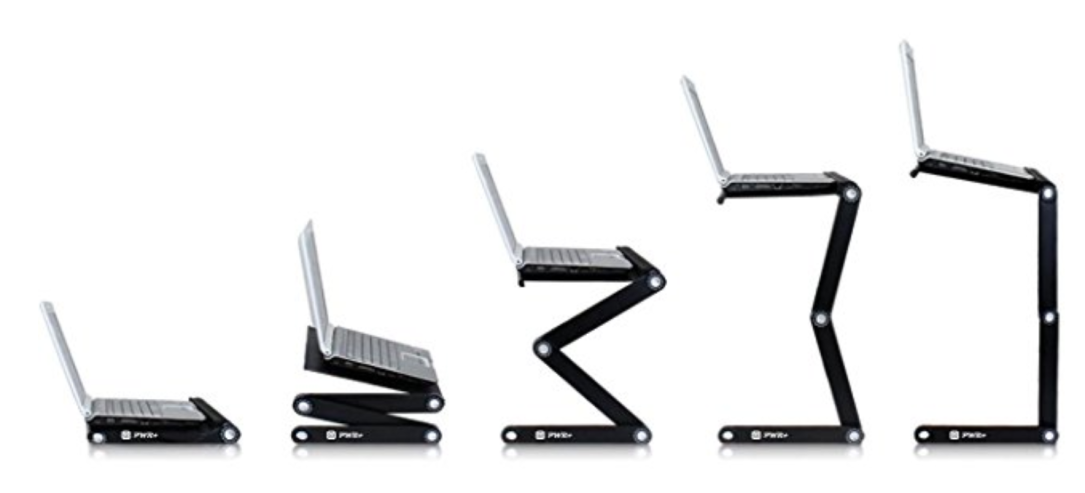
the PWR+ laptop stand.

Yesterday, my constantly-laptop-typing writer friend sent me an email – she had started to feel pain in her hands and arms and was growing alarmed that it might be the beginnings of a repetitive stress injury like the ones I had suffered. Had I ever felt her particular type of pain? Not exactly. But mine was similar enough that I felt compelled to swoop in with recommendations. After nearly two years with vaguely-diagnosable yet completely debilitating pains, I feel like something of an expert. You need a doctor? A physical therapist? An occupational therapist? An acupuncturist who takes insurance? A chiropractor? I can shuffle my stack of medical business cards like a Vegas magician: were you thinking of a massage therapist who also knows reiki? My audience volunteer gasps, YES, I do need one of those!


Where was I? Oh yes. So I resisted the urge to send this friend a 10,000 word email listing everything I have tried for my injuries. Instead, I will share them with you. I guess it would only be fair for me to forward her the link as well, since she inspired this post.

DISCLAIMER: I am NOT a doctor (insert testimonial about consulting your doctor…I am not legally responsible for what happens to you after reading this). I am, however, an informed consumer, so allow me to share some of my favorite tools with you. Oh, and I am not getting any commission here – these are actually the things I use.

ERGONOMICS

  • A laptop stand. Mine has three adjustable hinges and an adorable, removable mouse stand. It can be used as a standing desk, a keyboard rest for an existing monitor setup, or as a monitor stand. Plus it folds! And it weighs only 3.9 pounds!
  • An ergonomic split keyboard. I use the Microsoft Sculpt one with a detached keypad to activate a calculator on your screen. It keeps your arms parallel to  reduce strain on forearm muscles.
  • A decent wireless mouseI use the Logitech M185. I also have the Logitech wireless touchpad, which is like a larger version of the laptop trackpad. It’s good for navigating and zooming but less good for graphic work. I’m considering a vertical mouse, but haven’t made the leap yet.
  • A bean bag wrist wrest. I use the Ergo beads wrist rest to keep my wrists in perfect position for mousing.
  • An memory foam ass pad. Yes, I said ass pad. I have this chair pad. If you must sit at all, this will make it less hurty.

BRACES

  • I was slouching all over the place until I got a back brace. Fatigue can result in sloppy slouches. It is not ideal to use a brace instead of core strength, but the Shark Tank-featured BetterBack brace is really great for this.
  • Wrist splints. I wear these at night to prevent numb hands in the morning. It’s not exactly sexy, but neither is not being able to move your hands.

MUSCLE RELIEF

  • A neck heating pad. OMG. I cannot say enough about this. I got one as a gift from a coworker two years ago and have been using it every day since. I warm my neck up in the morning and again at night before doing my stretches. If you’re particularly crafty, as my mother is, you could make one from cherry pits (she actually bought a barrel of these). The one she gave me smells so good and gives off moist warmth. I overheated a burn hole it in the microwave one day, but salvaged the cherries and sewed a new one.
  • A peanut roller. What? It’s basically two lacrosse balls joined like a mini barbell. I roll it over my hands and forearms after typing for too long.
  • A foam roller. I use this every morning – it’s a packable size and less squishy then the fat pool noodle foam ones.  It offers a satisfying crack and pop as I roll my back over it

BOOK

  • Deskbound book . This one was recommended to me by my physical therapist. It’s a textbook, but written so lay people can understand it. If you’re looking for exercises to build or stretch those muscles after desk work, it is definitely worth the investment.

I hope these help! If you have any other go-to tools, send them my way!

Alienated Labor, Makers, My story, Productivity

Hobby Jobby?

The studio manager issues a gentle reminder that the doors will be open in exactly twenty minutes. I wistfully eye the other holiday market vendors with their neatly-arranged tabes. While they’re chatting away with each other, my husband and I are muttering under our respective breaths while struggling to assemble and reinforce our table with industrial-sized clamps and dollar store zip ties. Our inventory of cat toys, hats, note cards and leather bags is scattered on the floor well beyond the confines of our assigned space. Though this is our sixth year participating, we feel like rookies each time. What is wrong with us? I wondered.

One problem is that we are constantly changing our offerings, which means reinventing our booth display each year to accommodate new items. The other participants, who have a more consistent inventory, literally roll up with single suitcases on wheels and create simple, elegant, and seemingly effortless tablescapes. We, on the other hand, make our way up Broadway with our stuff precariously balanced on a U-Line industrial plastic cart (the kind that caterers use to deliver lunches to office buildings), a metal table that doesn’t fold (though we have a total of THREE folding tables at home) and three new metal grid-wall panels, held in place with a haphazard web of bungee cords. The grid, our latest acquisition, was supposed to add height to our 4-foot table to fit even more of our stuff. And this year, we have lots of stuff.

not-fair.jpg
Lots of stuff

Let me back up here. Since 2012, my boyfriend-turned-husband and I have participated in this amazing fair, which is organized by our neighborhood yoga studio-slash-community-center. Over the years, we have had our same corner booth location, in the main room near the shelves of yoga blankets and cork blocks. We are always flanked by a jewelry maker and her husband and the (very popular) ladies who have a waiting list for free chair massages. Over the years, we have formed a little family of sorts with the other sellers, and we have repeat customers who tell us that our catnip fish and origami mobiles now grace the homes of friends and family on other continents. This is not bad for a nights-and-weekends husband and wife side-hustle that basically pays for our crafting habit and gives us an excuse to binge-watch entire seasons of shows like A Million Little Things (which, by the way, I highly recommend).

But I digress.

Why were we so stressed out this year? It’s partly because we didn’t do the market last year (AKA The Year of Endless Physical and Occupational Therapy), when my hands and neck were in constant pain. Sewing and crochet, which, along with writing and drawing, were my only stress-relieving outlets, were out of the question. Two months ago, after a year of weekly OT, I regained my strength and stability enough to begin cautious crocheting while wearing a black plastic custom thumb splint I designed with my therapist. I was determined to make as many hats and cowls and cards and cat toys as possible in the limited time I had. Never one to under-do things, I approached my side-hustle, stress-relieving hobby with the ambition and joylessness of a first-year investment banker (I can’t vouch for the amount of joy felt by any investment banker, at any point in her career, but I would have NONE. Ever). This felt like work, not fun.

We eventually did get our table assembled, we sold a bunch of stuff, and we also managed to pack up and get home without losing anything, including our minds, on the streets of Manhattan. As I counted our earnings, I promised my husband that the 2019 market would be different. All we needed was a different table setup and a few small changes to our product line, right?

Exhausted from the day and from pushing our awkward caravan of stuff down eight blocks of Broadway, he offered a weary smile in response.

Next year will be different. I promise.

Productivity, Support System, Work tools

How to be your story’s protagonist

levelupImagine creating a secret identity for yourself, and now you are strong and brave and unafraid. You are resourceful, ready to vanquish enemies. You are part of a worldwide tribe that energizes and supports you. You are doing things you never thought possible and feel exhilarated and challenged. You are mastering—not enduring—life!  Sounds pretty good, right?

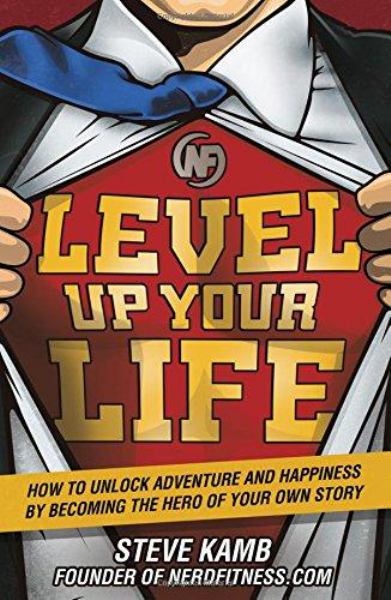
A few weeks ago, I was browsing the shelves at the public library and found Steve Kamb’s 2016 book Level Up your Life. The subtitle reads: How to Unlock Adventure and Happiness by Becoming the Hero of your Own Story.  A book combining narrative and agency to help people reach their goals? He has my attention.

The cover depicts a comic book-style illustration of a man ripping off his business shirt and tie to reveal his (six-pack abs and his) superhero costume. Our hero is answering a call to action; someone, somewhere, is in distress. Kamb does not need to rescue us readers, however. He offers an adaptable blueprint so that we can save ourselves. With a little imagination and discipline, even the humblest of nerdy office drones can take charge of her life, break free from being ordinary, and join this Rebellion. And she can have a lot of fun while doing so.

Kamb, the founder of nerdfitness.com, is a self-proclaimed formerly “risk-averse, picky eating introvert who felt more at home in front of a computer than in public.” He was happy enough in his post-college job, but was vaguely dissatisfied. After moving cross-country for a more interesting, but lower-paying job, he realized that he was still wasting his evenings and weekends drinking and playing video games to numb himself from his uninspiring life. He wanted a challenge, so he began with getting fit.

Kamb recontextualized his fitness quest as a game: he developed an origin story, an alter ego identity, and a series of increasingly more difficult challenges (in video games, this is known as leveling up). Once he began to see actual results from his workouts, he decided to help other nerds do the same by using game theory. He put his own video games aside, and for the next 18 months, devoted that same energy to building an online community. Then, he applied his method to other areas of his life. He knew he was onto something.

What I love about this book is that it is not just one guy bragging about how cool his life is now, how he is traveled to blah blah countries and done blah blah cool things. He makes leveling up accessible, encouraging his readers to start small while challenging them to play on increasingly difficult levels. Because he is a nerd, Kamb sprinkles references to video games and fantasy and science fiction characters throughout the book. He also builds his hero’s journey on the work done by Joseph Campbell and Christopher Vogler. Each step has its own chapter.

The main character is somebody of normal existence who goes through a journey that fundamentally changes him or her as a character. This character learns from a mentor, skeptically accepts the call to leave a comfortable existence, faces trials and tribulations, makes allies and enemies, outsmart or wins over the guardians of the threshold, struggles to survive/succeed, transforms, and ultimately returns home with altered/improved outlook on life.

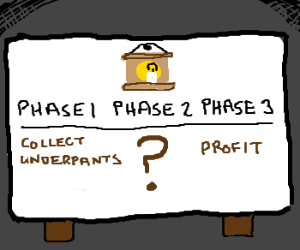
My biggest takeaway from this book is the cautionary tale of the South Park Underpants Gnomes. In the middle of the night, these little elves run around the fictional cartoon town, stealing people’s underpants. When asked why they are doing this, one replies, “Collecting underpants is just Phase 1!” When asked about Phase 2, the gnomes reply with, “Phase 3 is profit!” The gnomes never find out what Phase 2 is. Kamb’s message to his readers: stop mindlessly collecting underpants, or don’t consume yourself with busy work that doesn’t move you toward your goal. You have to  take action in Phase 2, or you will just have a shit-ton of underpants and no profit.

gnomes
Underpants Gnomes from South Park

This idea really hit home for me as I think back to my summer research project. In the beginning, I was obsessed with collecting all available information on my topic. I became a hoarder of articles and blog posts and books, and wasted hours organizing them into an indexed binder. I knew my goal was to write a paper, so why was I wasting my time? At one point, my advisor had to cut me off. She said, “That’s it! No new sources!”

gnome plan
You gotta have a Phase 2.

Damnit,  I thought.  Now I am going to have to do some real work.

Even if you don’t pick up the book, I hope you have learned this from Kamb, from the makers of South Park, and from me: Don’t be an Underpants Gnome.

Productivity

Setting a morning routine


plancard
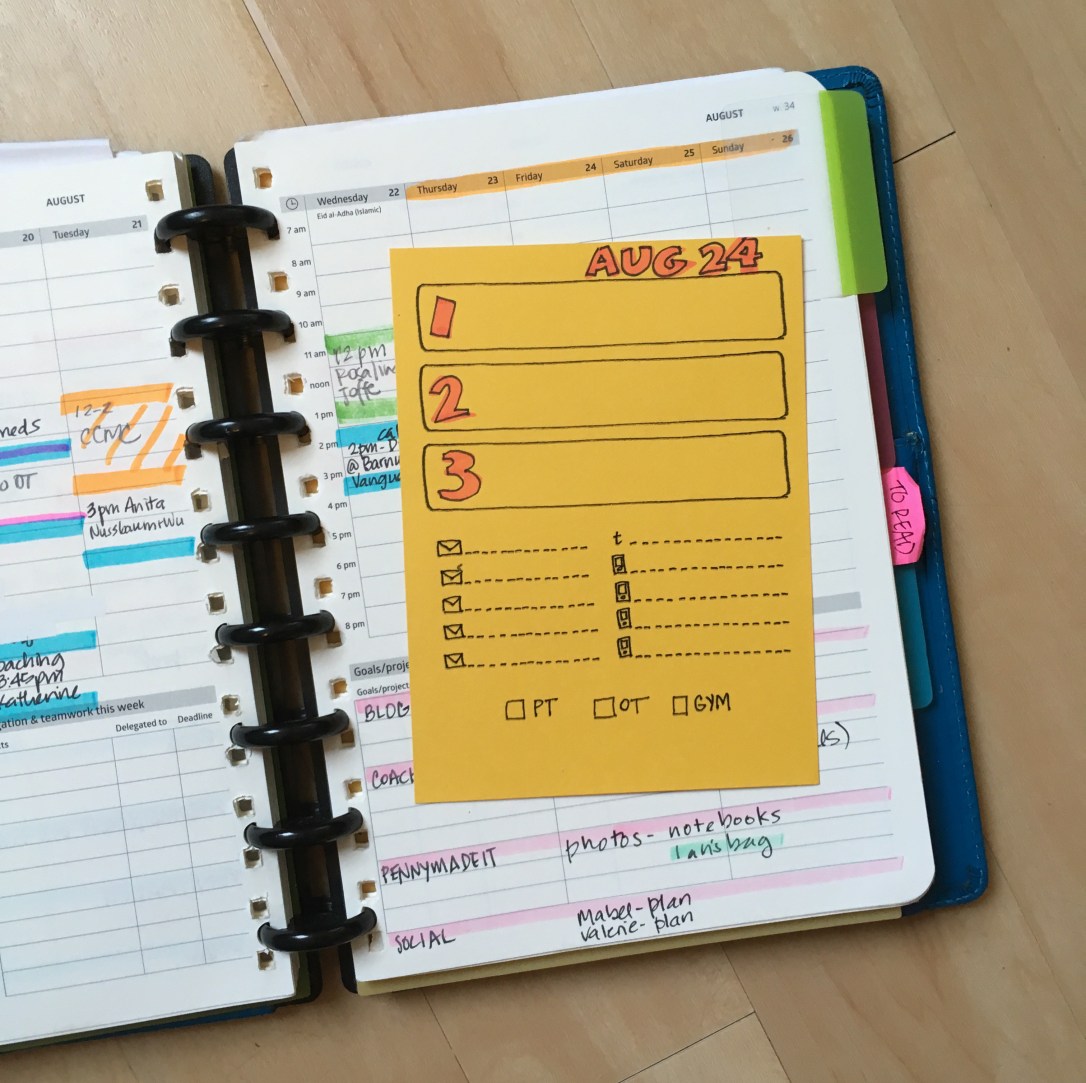
my top three tasks card

Before I could enjoy my very first Monday after leaving my job, I was already consumed with a new project: how to organize my time. Suddenly, the lines between work-me, student-me, and social-me were blurred. What was I going to do with no one telling me what to do?

If you’re going to leave your day job but know you are most productive when your days have structure, you have to be vigilant about establishing routines. I have spent the past six weeks trying to figure out the best method of managing my time, and the most important thing I have learned is to develop a morning ritual and stick to it. 

Here’s what mine looks like:

  • 6:00 – PT exercises
  • 6:30 – free writing/breakfast. I set a timer for 30 minutes and write while I eat. This writing doesn’t have any particular purpose; I’m just getting ideas out of so they don’t distract me all day.  When I go back to my notebook, I often find little tidbits that might inform a future project.
  • 7:00 – calendar review; fill in my index card with my top three tasks and follow-up emails or calls; schedule tasks in planner (you can find my template here).
  • 7:15 – writing sprint – I set my timer for 45 minutes and work on a writing project
  • 8:00 – check email.  I like to hold off as long as possible on checking email, and two hours is my limit. Besides, anyone who has a 9-to-5 job is not even in the office yet.
  • 8:15 – writing sprint
  • 9:00 – gym

Some of you may be thinking this schedule looks like your personal version of hell, but it worked for me. The underlying premise is that tasks that don’t get scheduled are harder to do, and we tend to underestimate how long it takes to do things.  For now, this method is working for me.

Crap! it’s after 9 o’clock – I’m late for the gym!