
You probably don’t know anyone else with my middle name: it’s Liden.
My first name, Jennifer, was chosen because it was ranked as the most popular girl’s name in 1974, the year I was born. This was my mother’s attempt to undo the childhood trauma of her own name. She was the only Ruby Jo in her school. Perhaps she overcompensated: each of my classes from kindergarten to college had at least three of me, so I became “Jennifer M.,” or in homeroom, where there were two of us, “Jennifer Monsen.” My friends, who wanted to keep it simple, just called me Monsen. My mother hates when you call her Ruby, and I hate when anyone calls me Jennifer. So we’re even, I guess.
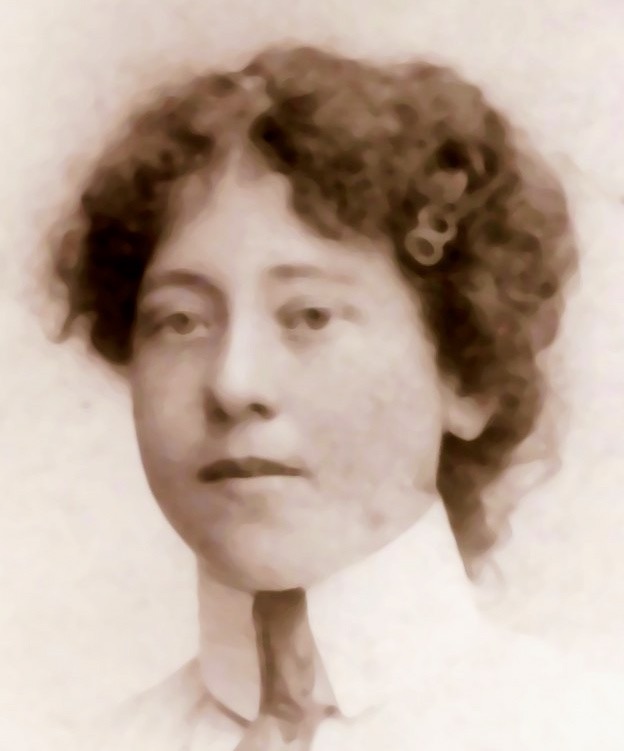
But Liden (pronounced LEE-din) is not even a name. It was a nickname, supposedly a term of endearment meaning “sweetheart” or “dear one” used for my great-grandmother Gerda, the only other person in my family with red hair and blue eyes. The mythology of Liden goes like this: she left Sweden for America to escape indentured servitude. Then she sent for her siblings. She was a red-haired, blue-eyed badass!
But then I met an actual Swedish person from Sweden, and I learned that Liden does not mean sweetheart or dear one, as I had been told—“L-I-T-E-N” just means “little.” I wasn’t the only one who was confused: everyone thought L-I-D-E-N was pronounced “Lydon.”
Years later, with the help of the Internet, I googled “Liden” and found a small Swedish town (254 inhabitants as of 2010). Scrolling down, my search yielded the word’s Danish origins, and its archaic, poetic form—it does mean little or small. Google Translate had additional insights: it is a Swedish noun meaning “slide” (as in, the playground kind), but it it is also a verb.
To “liden” aparently means to to receive, to suffer, to sustain, and to endure.
How can I make sense of all of this? Am I a “little” person who has been on the receiving end of sustained suffering? Have I been I living the Google-searched version of my great-grandmother (misspelled or not)? Or, can I embody strength and kick-assedness and be resilient as I inhabit her spirit?
Or maybe Swedish people just think pain is adorable? I’ll never know.
 this gruntled worker